PF27 Career Mode is the long-term way to develop one player across club matches and seasons. Start from the Career schedule, play or simulate the available fixture, improve the player between matches, and use performance and transfer interest to shape the next part of the career. It is not only a single-match mode: the useful decision is how each match contributes to the player's rating, objectives, development, and next club choice.
PF27 Career Mode at a glance
The Career screen connects the player, club schedule, match performance, upgrades, and transfers. Use the reference below to identify what each part does before deciding whether to play a fixture yourself or move the season forward with a simulation.
| Career part | What it changes | What to do |
|---|---|---|
| Player | Your position, stamina, rating, and development | Control the same player through the save |
| Career Schedule | The next fixture and season progress | Choose the next match, then Play Match or use the available simulation |
| Matches | Goals, assists, rating, objectives, and progress | Run, pass, control, and finish chances for the team |
| Player Upgrades | Improvement for later matches | Review upgrades after a match and apply supported improvements before the next one |
| Match Rating | A summary of your contribution | Protect possession, create chances, and complete team or personal objectives |
| Challenges | Specific performance targets | Check the current target and pursue it without abandoning the team play |
| Seasons | Long-term progression, including later seasons | Complete or simulate the schedule and check the next season |
| Transfer Interest | A choice to remain with the current club or move | Compare the current situation with the clubs shown when interest appears |
The table describes the role of each system rather than promising a fixed reward or rating formula. The Career evidence confirms Player Upgrades, Season 2, simulation, and a first transfer, but it does not establish upgrade costs, a complete season length, or a formula that converts individual actions into Match Rating.
How the Career schedule moves forward
Career progress is organized around the next fixture. Open the Career Schedule, inspect the available match, and choose whether to play it. A played match gives you direct control over movement, passing, touch selection, attacking runs, and finishing. A simulated match can move the schedule forward, but the available evidence does not establish exactly how simulation affects Match Rating, Challenges, Player Upgrades, or Transfer Interest.
Treat the schedule as a decision point rather than pressing through it automatically:
- Check whether the fixture is useful for a current challenge or for improving your Match Rating.
- Play the match when you need direct control over a target, a scoring chance, or your contribution to the team.
- Consider simulation when the fixture is less important to your immediate objective and you mainly want to advance the season.
- After the result, check for Player Upgrades and review the next fixture before committing to another match.
This structure supports both hands-on development and faster season movement. It also explains why a single result should not be treated as the whole Career outcome: the next upgrade, season checkpoint, or transfer decision can matter more than one scoreline.
Player growth, stamina, and touch choices
Player Upgrades are part of the Career progression and can be used before a later match. The available records confirm the upgrade step, but not the complete list of categories, points, costs, or exact attribute gains. Use the upgrade panel in the current game session as the authority for which improvements are available to your player.
Review player upgrades in Career Mode
This moment introduces Career Mode and later shows player upgrades before the next match, supporting the progression step described here.
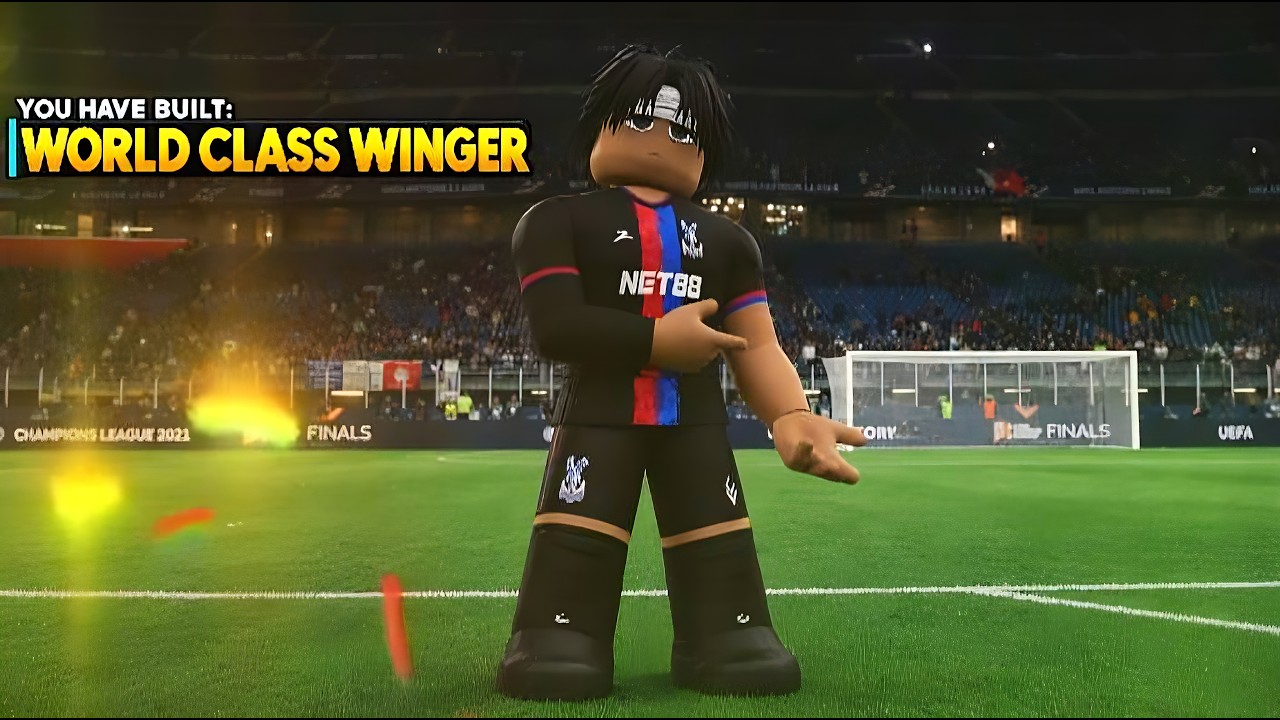
During matches, stamina is a practical limit on repeated high-intensity movement. Continuous sprinting can leave the player without enough stamina for a later run or attacking action. Build your movement around the phase of play instead of sprinting whenever the ball is nearby.
Touch selection provides a related trade-off:
- Precision Touch favors a more controlled touch when keeping the ball close matters. It can be the safer choice when receiving or protecting possession, although it may slow an attacking move.
- Long Touch favors pushing the ball forward and accelerating into space. It is useful when there is room to attack, but a heavier touch can make the next action harder if a defender is close.
Neither option is a permanent upgrade over the other. Select the touch that matches the space in front of the player, then conserve stamina so the next run remains possible. If the attack breaks down, reset with a simple pass or reposition rather than chaining more sprints into an exhausted player.
Match Rating and Career challenges
Match Rating is not presented as a goals-only score. The Career material records an 8.5 Match Rating and connects performance with goals, assists, effective movement, safe passing, and team objectives. That means a player can contribute to a strong match without turning every possession into a shot, while an isolated goal does not explain the entire rating.
Challenges add more specific targets to the match. Examples in the Career records include a hat trick, a goal from outside the box, a free-kick goal, and a Knuckleball objective. These examples show the kinds of outcomes a challenge can request, but they do not prove that every Career save has the same target or that completing one target uses a universal reward.
Use a two-layer plan when a challenge is active:
- Keep the team move alive with a pass, run, or controlled touch.
- Look for the required chance only when the match position supports it.
- Take the specific attempt when the target is available, such as an outside-the-box or set-piece opportunity.
- Continue contributing after the attempt; do not sacrifice every possession to force a challenge.
This approach protects Match Rating while still giving the challenge a realistic opportunity. The exact rating calculation and the effect of each completed challenge remain unconfirmed, so treat the on-screen result as the final measure for the current match.
The most useful way to read the post-match result is as a set of separate signals. Match Rating tells you how the performance was summarized, Challenges tell you whether a requested action was completed, and the schedule tells you what comes next. A good result in one signal does not automatically prove a result in the others. For example, a high rating does not establish that every challenge was completed, and a completed challenge does not establish a fixed upgrade amount.
Keep those signals separate when planning the next fixture. If the current challenge asks for a particular finish, create the chance without giving away every ordinary possession. If the player is running low on stamina, use shorter movements and safer passes until a useful attacking lane opens. If the next match is not suitable for the current target, a simulation may be a reasonable way to advance, but check the next panel because the consequences of simulation are not fully specified.
This also makes Career progress easier to compare across saves. The same club name or season label does not guarantee the same offer, challenge, or available upgrade. Use the visible player state and current objective as the decision context, rather than treating a recorded match outcome as a universal requirement.
Clubs, seasons, and transfer interest
Clubs provide the match environment and the longer-term career choice. The records mention Newcastle United, Hull City, Everton, Brentford, and Crystal Palace in Career footage or related context. These names should be read as clubs appearing in the recorded Career material, not as a confirmed ranking of the best starting club or a complete list of every available club.
Season progress comes from working through the schedule, either by playing fixtures or using available simulations. The evidence explicitly reaches Season 2 and references a late-season stretch, but it does not confirm the exact number of matches in a season, promotion rules, or a universal Season 2 unlock requirement. When the schedule changes season, use the new panel rather than relying on a fixed calendar assumption.
Transfer Interest is a career decision that can appear after the player has built a record with the current club. The material describes a first transfer and interest from multiple clubs, but it does not verify a fixed trigger formula, offer values, club tiers, or a guaranteed list of destinations. When interest appears, compare the displayed options with your current objective:
Review a first transfer in Career Mode
The linked Career moment discusses the first transfer and later comments on stamina during a match, supporting the transfer decision and match-management context in this section.

- Stay when continuity, current development, or the next schedule is more useful than a change.
- Move when the offered club and displayed career path better match the role or progression you want.
- Do not assume that a named club is automatically stronger; the current offer panel is the authoritative information for that save.
What Career Mode does not confirm
PF27 Career Mode has a clear loop, but several details are still variable or not established by the available player-facing records. There is no supported universal formula for Match Rating, no confirmed table of upgrade costs and attribute gains, and no verified rule describing how simulation changes challenges, development, ratings, or transfer interest. The complete save-creation choices and initial club-selection rules are also not fully specified.
For reliable decisions, read the current Career panel after every match. Check the next fixture, available Player Upgrades, active Challenges, stamina state, season label, and any Transfer Interest before selecting the next action. That keeps the guide useful even when the game changes its balance or presents a different club and challenge in another save.
First-time PF27 Career questions
Should I play every Career match instead of simulating it?
No. Play a fixture when you need direct control for a challenge, Match Rating, or a specific performance goal; simulation can be used to move the schedule forward, but its exact effects on rating, challenges, upgrades, and transfer interest are not confirmed.
Is Match Rating based only on goals?
No. The Career records connect Match Rating with broader contributions such as assists, effective movement, safe passing, and team objectives, although the exact rating formula is not confirmed.
When should I use Precision Touch or Long Touch?
Use Precision Touch when keeping the ball close is more important, and Long Touch when space is available for a forward push. The first can slow an attack, while the second can make the next action harder if a defender is nearby.
What should I check after a Career match?
Check for Player Upgrades, the next Career Schedule fixture, active Challenges, the season label, and any Transfer Interest. The current in-game panels are the authority for available upgrades and offers.