PF27 is easiest to learn by treating your first match as a positioning and decision exercise: identify the ball and both goals, choose a role, offer safe passing options, and recover to your area when possession changes. Start with reliable short passes and ordinary shots; use the controls guide for touch choices and the shooting guide for finishing only after you can complete a match without wasting stamina.
Your first PF27 match target
Your first target is not to force a highlight. Finish a complete match while keeping a useful shape, making a few safe passes, and creating at least one sensible shooting chance. The role changes what “useful” means: a midfielder connects defense to attack, a forward finds space and a finishing angle, and a defender protects dangerous central areas.
Before moving, locate your team’s goal, the opponent’s goal, the ball, and nearby teammates. Keep enough distance to give the ball carrier a passing option. When your team loses the ball, return toward your responsibility instead of chasing the ball blindly.
Use the same observation habit in every phase. Scan before receiving the ball, decide where the next safe pass is, and only then choose a touch or sprint. If you are defending, identify the opponent most likely to receive the next pass rather than running directly at the current ball carrier. This keeps your first match focused on decisions that transfer between positions.
How a PF27 match moves
PF27 matches are possession sequences inside a larger session: a team builds an attack, loses or keeps the ball, defends the next action, and then tries to transition forward again. Your next decision depends on the current state rather than a fixed story route.
With the ball, look for an open teammate or a safe route forward. Without the ball, move into space or back toward your role so the team has an outlet and fewer defensive gaps. A completed match then gives you feedback through Match Rating and challenge progress; Career Mode connects matches into Seasons and can lead to upgrades and transfer situations.
The practical sequence is therefore state-based: kickoff becomes buildup, buildup becomes a chance or a turnover, and a turnover becomes recovery or a new possession. It is not necessary to repeat one exact route. A blocked passing lane may send you backward, while open space may justify a forward touch. Treat a safe reset as a successful decision when the attacking option is not ready.
The tools that shape your first game
- Position: Your role sets your main responsibility. Midfielders support both phases, forwards prioritize runs and finishing, and defenders protect dangerous areas. Use the role as a positioning guide rather than staying fixed in one spot.
- Passing: Passing keeps possession and links teammates. Prefer a short pass to an open player; if no lane exists, protect the ball briefly or reposition before forcing a pass.
- Positioning: Positioning creates the next pass and limits counterattacks. Move into a visible lane when your team has the ball, then recover toward your area after a turnover.
- Precision Touch: This keeps the ball close for careful control in pressure, tight spaces, or while adjusting a shot. It can slow movement, so do not use it automatically in open grass.
- Long Touch: This pushes the ball farther ahead for faster progress when there is space to run into. Use it selectively because a heavy touch can expose the ball.
- Sprint and Stamina: Sprinting helps you close space or attack a gap, but repeated bursts can leave you short of energy during the next attack, recovery, or shot. Save a burst for a meaningful action.
- Shooting: A shot converts an attack into a chance. Check distance, angle, aim, power, and the goalkeeper’s position before choosing a normal or special finish.
- Match Rating and Challenges: Match Rating reflects broader match contribution, not just goals, while Challenges can ask for outcomes such as three goals, a goal from outside the box, a Free Kick, or a Knuckleball. Check the current objective before chasing it.
PF27 also exposes a broad football toolkit, including skill moves, slide tackles, finesse, Trivela, volleys, headers, bicycle kicks, and goalkeeper gameplay. The available game description confirms those features but does not establish a complete universal keybind list, so learn the current control prompt for your device instead of copying an unverified keyboard layout. The game supports PC, Mobile, and Controller play.
Your first complete match
- Choose a workable role. Pick midfielder if you want repeated involvement in buildup, forward if you want to practice runs and finishing, or defender if you want to learn spacing and recovery.
- Map the field. At kickoff, identify both goals, the ball, nearby teammates, and the most dangerous opponent. Do not sprint immediately without knowing where the next play is going.
- Create a passing option. Move into open space at a useful distance from the ball carrier. Keep your body and route clear enough that a short pass is practical.
- Play the safe pass. If a teammate is open, pass early. If the lane is blocked, use a brief touch to protect the ball or move into a better angle instead of forcing a difficult ball.
- Select the touch for the space. Use Long Touch to accelerate into open space. Switch to Precision Touch near pressure, in a crowded area, or while setting up a shot.
- Build the chance. Continue with short passes, a run into space, or a wide move and return pass. Keep some stamina available so the final run or recovery is still possible.
- Check before shooting. Confirm the angle, distance, aim, power, and goalkeeper position. Use a normal shot while learning; practice Curve, Top Spin, or Knuckleball only when you understand the basic contact and aim.
- Recover after the play. If the shot misses or possession changes, return toward your role and protect the dangerous route instead of following the ball everywhere.
- Review the result. After the match, check Match Rating and Challenge progress. Use that feedback to choose one improvement for the next match, then consider Player Upgrade or continued Career Mode progression.
Choose touches and review your first PF27 match
These moments support the guide's advice to switch touch types based on space and review Match Rating after the match.
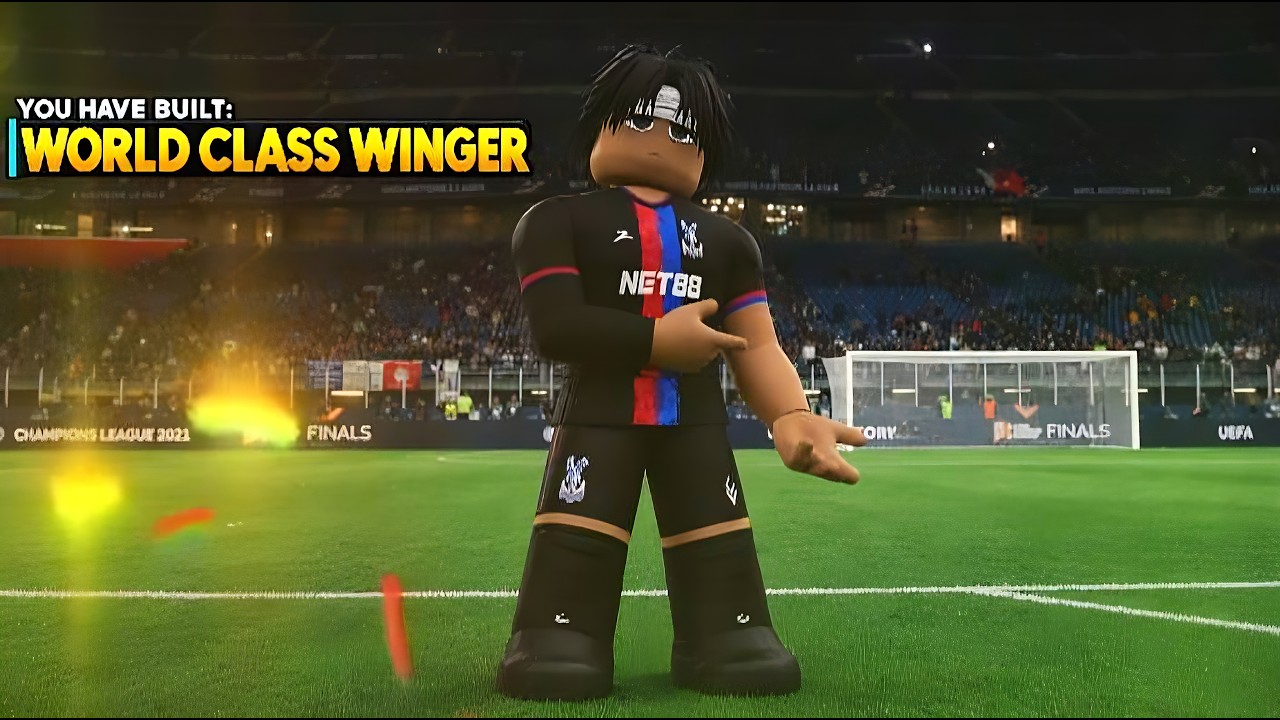
For a set piece, slow the decision down rather than treating it like an ordinary shot. Free Kicks and Penalties use Power, Curve, and Aim together, so check all three before confirming the attempt. A Challenge may make a particular finish worth attempting, but a normal open-play chance is usually the better place to build consistency.
Priorities and recovery choices
Prioritize the basics in this order: maintain a passing option, protect possession, manage stamina, recover after losing the ball, and only then attempt advanced shots or skill moves. This order gives you more repeatable chances than chasing a difficult finish early.
- You sprinted until Stamina was low: Stop spending bursts on every movement; use positioning and short passes while recovering enough energy for the next decisive run.
- You lost the ball while dribbling: Do not immediately chase the ball carrier across the field. Return to your defensive area and cover the most dangerous lane.
- Your pass has no clear route: Protect the ball briefly, turn or reposition, and wait for a teammate to become visible rather than forcing a pass through pressure.
- Your shot is rushed or off angle: Rebuild the chance with a pass or a better run. Use ordinary shots until aim and power feel consistent, then add special shot types.
- You missed a Knuckleball or other advanced finish: Treat the attempt as practice, not as a fixed success rate. Recheck distance, aim, and power before trying it again.
- You are unsure what to improve after a match: Read Match Rating and current Challenges together. Improve the weakest repeatable behavior first—spacing, passing, recovery, or shot selection—before spending attention on a new trick.
When those basics become reliable, Career Mode gives the routine a longer horizon. Matches contribute to Seasons, and the available evidence shows upgrade and transfer situations, including a first transfer and a later Season 2 example. Treat the current in-game Career panel as the authority for the next requirement because the exact transfer triggers and upgrade values are not fully specified here.
First-time PF27 match questions
Which devices can I use to play PF27?
PF27 supports PC, Mobile, and Controller play. Use the current control prompt for your device because the available game description does not provide a complete universal keybind list.
What should I adjust before taking a Free Kick or Penalty?
Check Power, Curve, and Aim together before confirming the attempt. A Challenge may ask for a particular set-piece finish, so check the current objective before choosing how aggressively to attempt it.
What does Career Mode add after my first match?
Career Mode connects matches into Seasons and can lead to Player Upgrade and transfer situations. The exact transfer triggers and upgrade values are not fully specified, so use the current Career panel for the next available requirement.