PF27 shooting is most reliable when you create a visible lane, settle your body, and choose the finish that matches the ball and goalkeeper. Start with a normal ground shot while the ball is controlled. Move to a curved, long-range, chip, volley, header, or other special attempt only when the angle, pressure, and ball height give that option a clear reason; for dead-ball chances, continue with the penalty and free-kick guide.
Read the chance before shooting
The shot decision begins before the ball reaches your player. Scan the goal, goalkeeper, nearby defenders, and teammates. A goalkeeper who is out of position can leave open space to target, while a set goalkeeper and a closing defender may make a short pass or one more touch more valuable than an immediate attempt.
The useful question is not simply “Am I near the box?” Check three alignments instead:
- Ball: Is it controlled on the ground, arriving in the air, or still moving away from you?
- Body: Can your player face the useful part of the goal without turning into pressure?
- Lane: Is there a visible route to the target, or is a defender already occupying it?
Create space with a small change of direction rather than running directly into the nearest defender. Even a short move can open more of the net and give you time to aim. If two defenders close the route, keep possession with a pass or reposition instead of forcing a shot through them.
PF27 shooting options
Use the following table as a choice guide, not as a promise that any finish is automatic. PF27’s shooting guidance describes the situations and outcomes, but it does not establish universal button combinations, power thresholds, or a best curve value for every device.
| Finish | Best use | Main check | Main risk |
|---|---|---|---|
| Normal Shot | Controlled ground ball and a clear lane | Body direction and open target | Rushed or blocked attempt |
| Long-range Shot | Space outside the box or at distance | Enough room for a direct route | Distance and pressure reduce control |
| Curved Shot | An angled chance where the route can bend around pressure | Aim direction and curve adjustment | No fixed curve value is confirmed |
| Knuckleball | A deliberate special attempt when you can control aim and power | Practice with a visible target | Unpredictable misses while learning |
| Top-spin Shot | A special shot with room to direct the ball | Release timing and target | A successful example does not make it automatic |
| Chip Shot | A goalkeeper who is out or positioned forward | Keeper distance and required lift | Too much or too little lift |
| Volley | An airborne ball that should not be settled first | Ball height and landing path | Poor prediction of the contact point |
| Header | A high cross or lofted ball arriving on a heading path | Your position under the ball | Being too far from the flight path |
| Set-piece Shot | A free-kick or other special dead-ball chance | Power, curve, and target | Its detailed procedure belongs with set pieces |
Normal Shot is the foundation. It lets you learn the relationship between body direction, aim, release timing, goalkeeper position, and the amount of space available. Use it until you can recognize when a chance is genuinely open; advanced finishes are easier to evaluate once the basic decision is familiar.
Match the finish to the ball
For a controlled ground ball, prefer a normal shot when the target is visible. A long-range shot is a separate choice for a player who has earned space farther from goal; outside-the-box scoring appears as a challenge objective, but no fixed distance or guaranteed range is defined. Treat it as an opportunity created by space, not as a required shot from one exact spot.
Curved shots are useful when the attacking angle gives you room to shape the route around pressure. The evidence records curve adjustment but does not confirm a single input sequence or an optimal numeric setting, so do not copy a value as a universal solution. Aim at the part of the goal you want to reach and adjust only as much as the lane requires.
Knuckleball and Top-spin are advanced choices. A Top-spin attempt is documented as producing a goal in gameplay, while Knuckleball attempts also include a miss. Those examples show that the finishes are available and worth practicing; they do not make either one a guaranteed scoring method. Give yourself a clear target and avoid learning them in a crowded lane where a normal pass would preserve the attack.
Practice a Top-spin shot in PF27
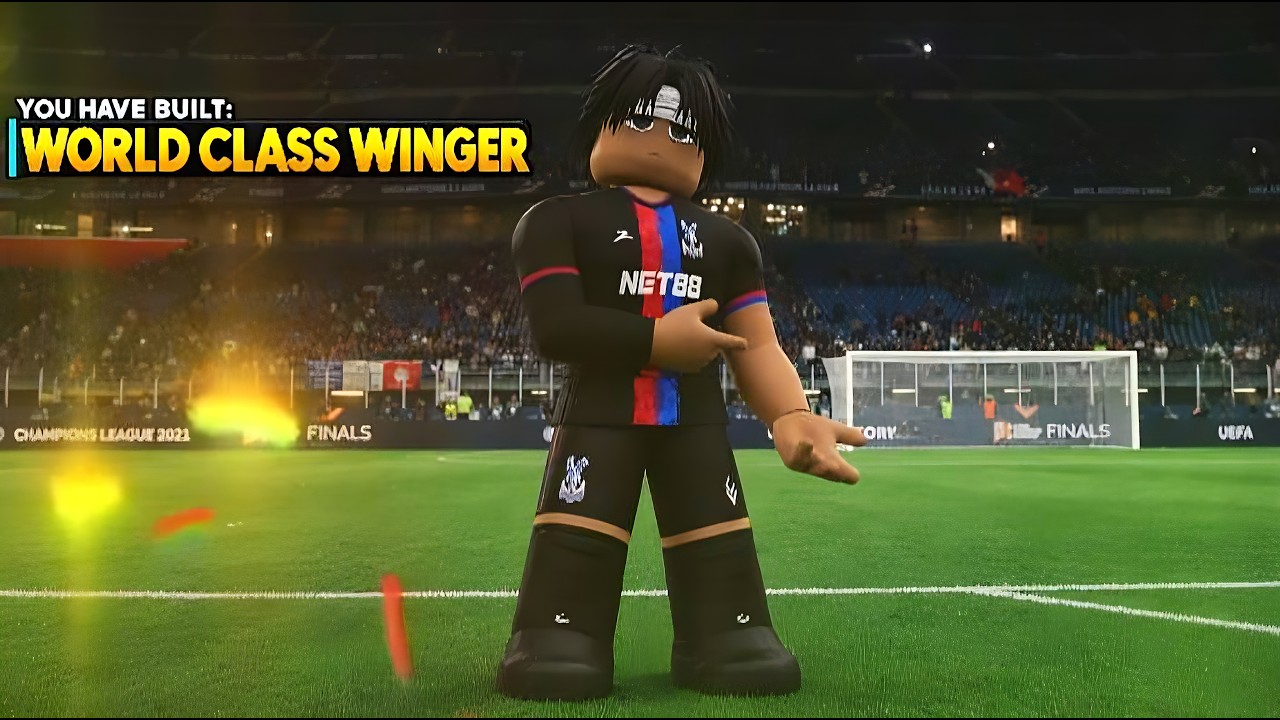
This moment supports the Top-spin practice guidance by showing an attempt followed by the first goal described in the shooting section.
The ball’s height changes the decision. A volley is appropriate when the ball arrives in the air and waiting for it to settle would lose the chance. A header fits a high cross or lofted ball that reaches your player’s heading path. In both cases, predict the ball’s height and path first. A universal input for either action is not confirmed, so focus on positioning and contact timing rather than an invented control recipe.
Build a clean shooting lane
The most repeatable improvement is to prepare the chance before pressing the shot action. Keep enough balance to face the target, preserve part of your stamina before entering the danger area, and avoid taking your first touch directly toward a defender. PF27’s touch options support different movement intentions: a Precision Touch helps retain close control, while a Long Touch can move the ball forward more quickly. A long touch can also leave you less prepared for the final body adjustment if you use it repeatedly.
Use this decision order when the ball comes to you:
- Scan early. Check the goalkeeper, defenders, goal opening, and nearby teammates before receiving the ball.
- Create the lane. Move slightly away from pressure or into a better angle instead of accepting the defender’s line.
- Set your body. Face the useful part of the goal and take a touch that keeps the ball available for the chosen finish.
- Choose the finish. Use a normal shot for a controlled ground ball; use a volley or header when the ball is airborne; select a special shot only when its situation justifies the added difficulty.
- Verify the outcome. Follow the shot for a rebound or loose ball, then recover your team position if the goalkeeper or defender stops it.
This order prevents a common mistake: treating every touch in the attacking area as a shooting command. If the keeper has sealed the angle, shift the ball, pass, or wait for a teammate rather than aiming at the blocked space. If a defender arrives during your setup, the correct recovery is to protect possession and reset the attack, not to force a late special shot.
Goalkeeper and pressure decisions
The goalkeeper changes the target more than the distance alone. When the keeper is displaced, shoot toward the open part of the goal rather than automatically aiming at the center. When the keeper is set and your lane is narrow, a pass or repositioning touch can create a larger target on the next action. A chip is specifically dependent on the keeper’s distance and forward position; it is not a default replacement for a normal shot.
Evaluate a chip shot against the goalkeeper
This moment supports the chip-shot guidance by showing an attempt and the player's comment on its result, reinforcing that the finish depends on goalkeeper position and lift.

Defender pressure also determines whether the attempt is worth taking. One closing defender may be beaten by a small angle change. Two defenders blocking the route usually justify a pass or a reset. A teammate with a clearer lane is part of the shooting decision, not a distraction from it. PF27 challenges can ask for outcomes such as three goals, an outside-the-box goal, a free-kick goal, or a Knuckleball goal, but a complete reward list, exact distance test, and fixed completion recipe for those objectives are not confirmed.
Stamina matters because the final action still needs a stable approach. The gameplay record includes a moment where the player notes having no stamina. That is a practical warning: after repeated sprinting, preserve enough control to adjust your body and read the keeper before shooting. If you are already off balance, pass or take space first.
Practice goals and limits
Practice in layers. First, repeat normal ground shots from clear angles until you can explain why the lane was open. Next, add long-range and curved attempts when you have space. Then practice Top-spin, Knuckleball, chip shots, volleys, and headers one at a time, changing only one decision variable—angle, ball height, keeper position, or release timing—so a miss teaches you something.
After every attempt, use the result as a decision check:
- Blocked: the lane was not open; move, pass, or wait before trying again.
- Wide or off target: review body direction and aim before changing the finish.
- Saved: check whether the keeper’s position made the target too small, then look for a rebound or reset.
- Scored: note the space, ball state, and keeper position, but do not assume the same shot works from every angle.
Do not treat a recorded successful Top-spin attempt or a failed Knuckleball or chip attempt as a fixed tier list. These finishes are available for situational use, but no universal best shot, exact controller mapping, or guaranteed conversion rate is established. Mobile, keyboard, and controller-specific shooting inputs also remain subject to the current in-game controls. Check the live control panel when the action is not responding as expected.
The same boundary applies to set-piece shooting. Power, curve, and aim matter for those chances, but their complete process belongs in the dedicated Set Pieces guide. Here, use the shooting principles to decide whether the opportunity is worth taking and which target to choose.
First-time PF27 shooting questions
Does PF27 have a guaranteed best shooting technique?
No. The supported guidance is situational: normal shots are the foundation, while curved shots, Knuckleballs, Top-spin, chips, volleys, and headers depend on the lane, goalkeeper, pressure, ball state, and timing.
When should I use a chip shot in PF27?
Use a chip when the goalkeeper is out or positioned forward and you can judge the required lift. It is not a default replacement for a normal shot, and gameplay examples include misses while learning it.
Do PF27 shooting inputs differ by device?
They may. A universal mobile, keyboard, or controller input is not confirmed here, so check the current in-game controls if an action does not respond as expected.